By Kim Kasule | February 2026
The foundational advice every ambitious creative needs to hear.
There is a particular kind of genius that lives inside the creative entrepreneur. It is instinctive, resourceful, and relentlessly energetic. It sees opportunities before the market fully names them, builds customer loyalty through authenticity and personality, and keeps moving even when resources are limited.
But here is the truth that too few people say plainly: hustle alone does not build a business. It builds a very busy life.
The journey from creative hustler to creative entrepreneur is one of the most important - and most overlooked - transitions in business. It does not mean abandoning the instinct, passion, and creativity that helped you start. It means giving those strengths the structure they need to become a lasting, profitable enterprise.
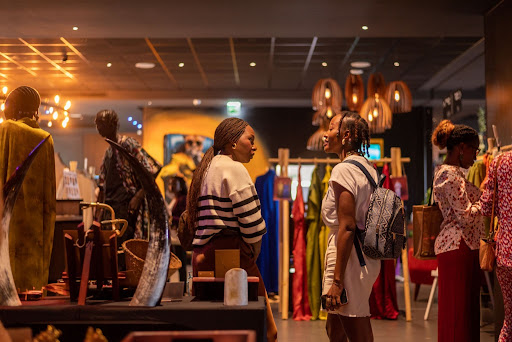
This is especially important for young entrepreneurs in Africa's fashion and home decor industries, where creativity is abundant, demand is growing, and locally made products have powerful cultural and commercial value.
Strategy: The Missing Middle
Ask many creative entrepreneurs what their strategy is, and you will often hear one of two things: an enthusiastic description of what they make, or a passionate explanation of what makes them unique. At its simplest, strategy is a deliberate plan to grow a business by meeting customer needs better than competitors do. It sits at the intersection of three things: customers, cash generation, and growth.
This is where many creative businesses quietly struggle. They attract customers, sometimes very effectively, but the money does not stay. Revenue comes in and flows straight back out because the cost structure was never fully understood. Growth happens, but instead of strengthening the business, it exposes weaknesses because the model was never designed to support expansion.
The biggest threats to creative businesses are rarely dramatic. More often, they are slow and silent: weak profitability, poor product-market fit, and inconsistent execution. The idea may be excellent. The energy may be real. But without structure, momentum is difficult to sustain.
Understanding the Market Before Refining the Product
One of the most common traps in creative industries is making something beautiful first and only later looking for someone to sell it to. Before refining the product, understand the demand. A useful starting point is to ask four questions:
- Is there genuine demand for what you are offering?
- Is that demand financially attractive enough to pursue?
- Can you produce and deliver consistently at the required quality?
- How can you test the idea quickly and affordably before going all in?
Understanding the market also means understanding the customer beyond surface-level assumptions. Customers are not simply buying objects. They are buying solutions, feelings, and signals. This is particularly powerful in African fashion and home decor, where products often sit at the intersection of utility, self-expression, heritage, and status. Entrepreneurs who understand these dimensions build stronger brands and price more confidently. They compete on meaning and experience, not just cost.
The Business Model: Revenue, Profit, and Cash
A business model is simply the answer to three practical questions: How will you create and deliver value to customers? How will you make, deliver, and support it? And how will the business generate revenue, profit, and cash?
- Revenue is what comes in.
- Profit is what remains after costs.
- Cash is what keeps the business running day to day.
A business can look busy, popular, and promising, while still running out of money. This is one of the most common reasons creative businesses stall. For young entrepreneurs building local production businesses, understanding cost structures is essential. Pricing must reflect not just creativity, but also materials, labour, transport, quality control, packaging, and a healthy margin.
Growth vs. Scale: Systems Are the Bridge
One of the most important distinctions in entrepreneurship is this: growth and scale are not the same thing. Growth means doing more. Scaling means growing faster than your costs. If every new order, new customer, or new retail opportunity requires a matching increase in time, labour, and expense, then the business is growing - but not necessarily scaling.
For creative entrepreneurs, the path to scale almost always runs through systems. The work you currently hold in your head - the way you source materials, manage production, communicate with clients, package products, track orders, or maintain quality - must eventually be documented, standardised, delegated, and measured.
The real shift from creative hustler to creative entrepreneur happens when you stop being the only person who can make the business work, and start becoming the architect of a business that works beyond your personal energy.
Execution: Turning Promise into Enterprise
Even the strongest business model means very little without disciplined execution. For the creative entrepreneur, execution usually comes down to three things working together: the right people in the right roles, clear routines and accountability, and a founder who understands the details without becoming buried in them.
Good strategy creates alignment. Everyone in the business should understand what the business is trying to achieve, how their role contributes to that goal, and how success will be measured. Without that alignment, teams become busy without being effective.
Creative founders often have a remarkable ability to spot possibilities before others do. That is a real strategic strength. But vision alone is not enough. The real work is building the structure that can capture that opportunity consistently, profitably, and at scale.
Creativity as Economic Power
For young entrepreneurs in Africa's fashion and home decor industries, the business fundamentals are not a distraction from creativity. They are what allow creativity to become sustainable, investable, and scalable.
The journey from creative hustler to creative entrepreneur is not a betrayal of artistic identity. It is the full expression of it. Because the most powerful creative act is not only making something beautiful - it is building a business that delivers value consistently, generates real profit, strengthens local production, and outlasts the founder's personal hustle.
That is how local talent becomes local industry. That is how quality production becomes scalable retail. And that is how creativity becomes economic power.