There is no debate about the potential of AI to revolutionize how we work and fashion is no exception. As a McKinsey report further elaborates, AI can affect the entire fashion ecosystem - cutting costs, saving time, and making better, more personalized designs - that is, if all goes well. According to Karen Hao, a journalist and senior reporter at MIT Technology Review, without adequate protection, workers - especially minority workers - remain vulnerable to exploitation from corporations if left unprotected by their governments.
The fashion industry is second only to agriculture in its potential to employ people. For developing countries, however, ground-breaking profits in the West have often equated to sweatshops characterized by low pay and inhumane working conditions.
Like in any other industry, the overarching threat of fewer jobs as many skills will become redundant remains. But even when workers pick up the skills to work in AI companies - as has been the case for the data annotation workers of Remotasks - they are still vulnerable. Remotasks advertised itself as an opportunity to earn in USD doing online tasks from Africa, but what started as a miraculous opportunity to feed one's family morphed into unhealthy work hours with colleagues deliberately pitted against one another. More devastatingly, with no warning, Remotasks shut down operations and locked workers out of the website. For people who had been relying on this as a sole source of income, such news is ruinous. The pattern is consistent across the continent with workers from Rwanda, Nigeria, and South Africa sharing similar stories.
So Just What Protections Exist for Ugandans?
In 2019, Uganda set up the "Expert National Task Force on the Fourth Industrial Revolution." The task force is led by John Nasasira and comprises 22 other engineers, academics, and policymakers. There is no public record yet of the outcomes of this task force. Other relevant regulations include the Data Protection and Privacy Act of Uganda, 2019.
What Would an Ideal Policy Framework Look Like?
Looking at the EU AI Act - the World's First Comprehensive AI Act - the EU parliament has prioritized safety, traceability, inclusivity, and environmental friendliness. The systems must be overseen by people and not automation to prevent harmful outcomes.
- Risk-Based Approach: The EU AI Act adopts a risk-based approach, categorizing AI applications into four risk categories: unacceptable risk, high risk, limited risk, and minimal risk. Different regulatory requirements apply based on risk level.
- High-Risk AI Systems: AI systems used in critical infrastructure, healthcare, transportation, law enforcement, recruitment, and educational admissions must comply with obligations related to data quality, robustness and accuracy, transparency and explainability, human oversight, and documentation.
- Conformity Assessment: High-risk AI systems must undergo a conformity assessment procedure to ensure compliance with regulatory requirements, including risk assessments and documentation of compliance.
- Prohibited Practices: The EU AI Act prohibits AI practices that pose significant risks to individuals - including systems that manipulate human behavior, conduct social scoring, exploit vulnerable groups, and enable real-time biometric identification in public spaces for law enforcement purposes.
- Transparency and Accountability: AI providers must provide clear and accurate information about the capabilities, limitations, and intended use of their AI systems, and establish mechanisms for monitoring and addressing performance and compliance over time.
- Enforcement and Oversight: The Act establishes national competent authorities responsible for overseeing AI regulation, conducting market surveillance, and imposing penalties for non-compliance.
- International Cooperation: The Act encourages international cooperation and alignment with global AI governance initiatives to promote interoperability and harmonization of AI regulation across jurisdictions.
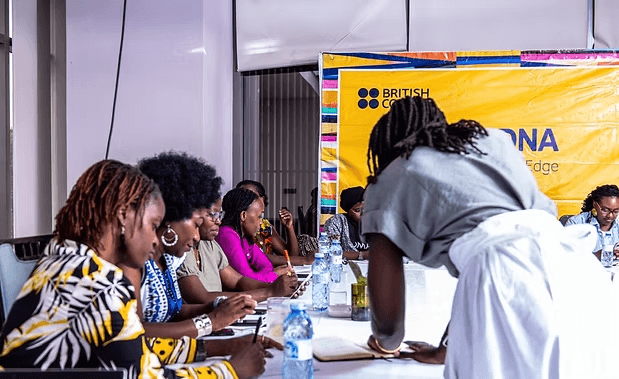
In a discussion aimed at securing workers' rights in the AI revolution, leaders insisted on the need to create social protections that kept people at heart. The transition to AI in fashion presents both opportunity and risk - and for Uganda's young fashion entrepreneurs, getting the policy environment right is not optional.